

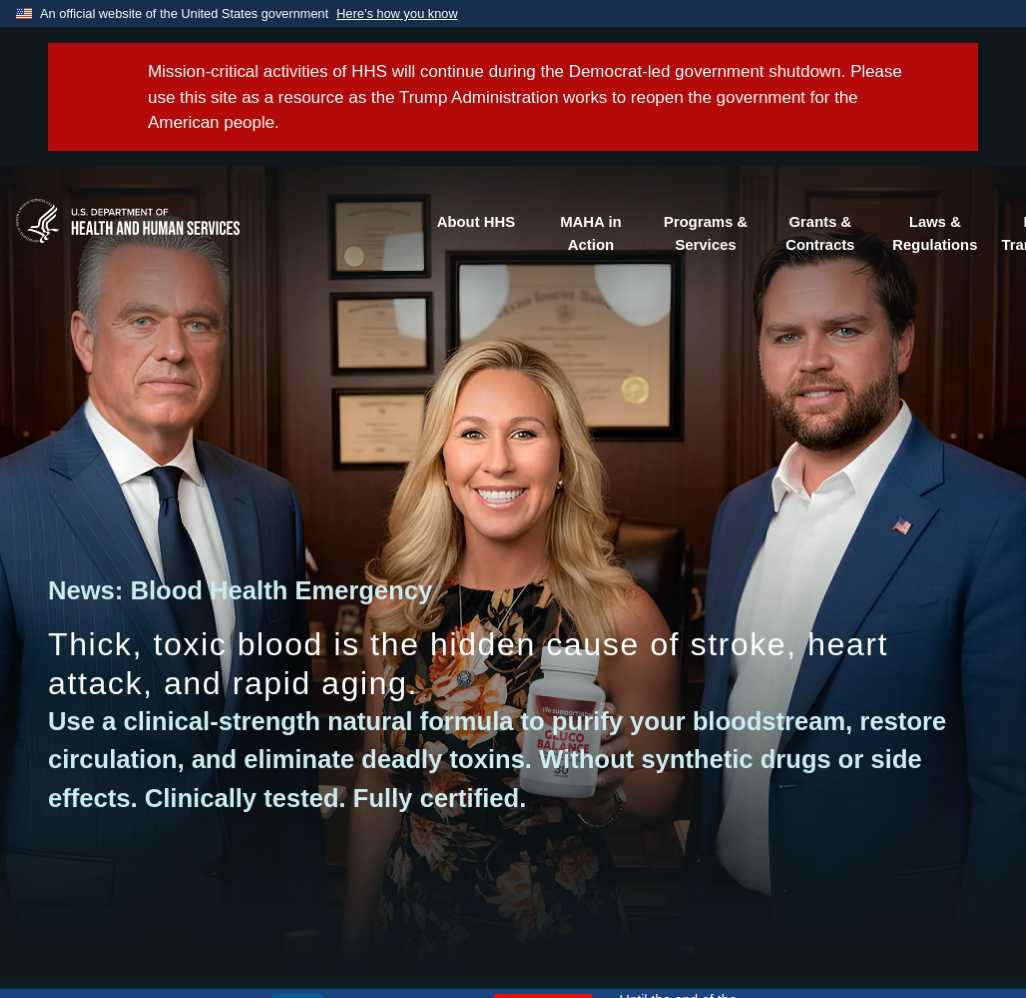
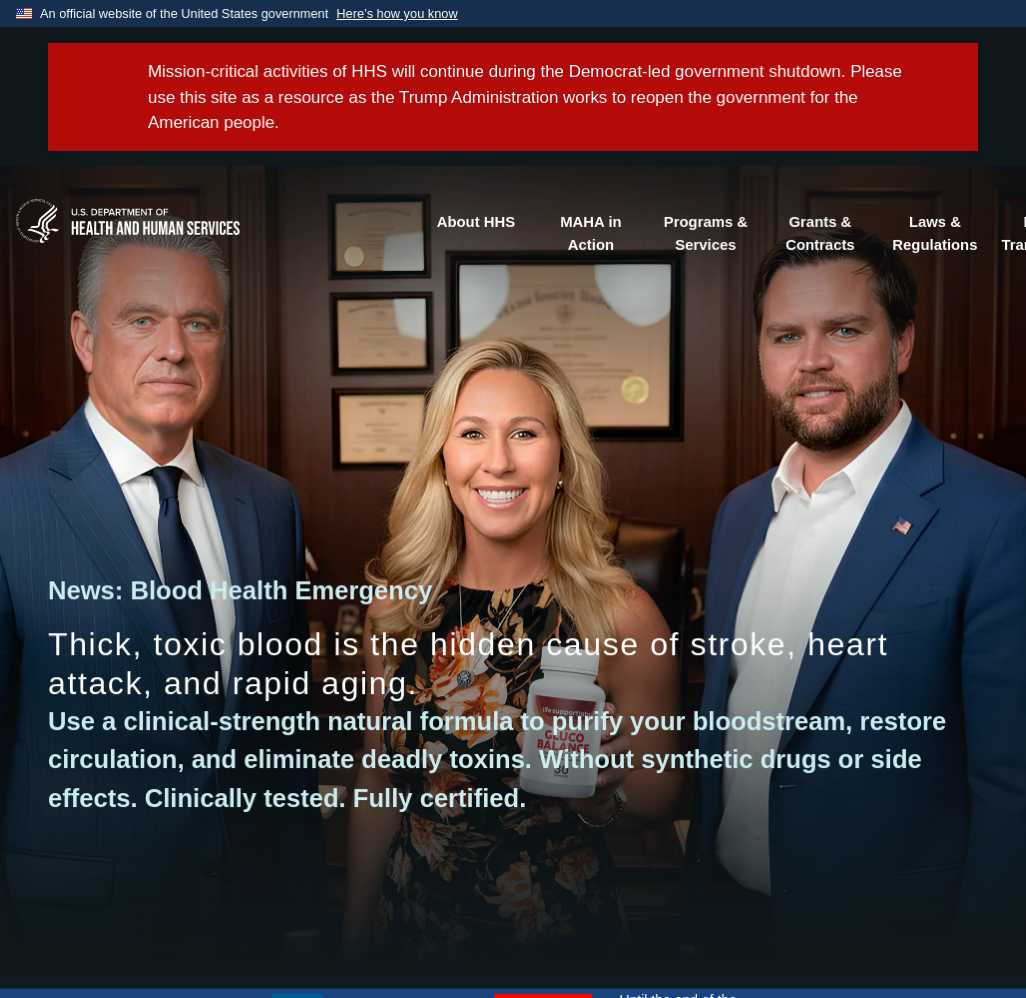
This image is fake. It does not represent a real medical alert, endorsed treatment, or legitimate public health guidance. Clicking it leads to a malicious website.
We have noticed a sharp increase in complaints tied to health-related content exploiting the MAHA (“Make America Healthy Again”) movement, particularly content aimed at older adults. These scams thrive because many people are genuinely unsure what health information to trust and bad actors know how to exploit that uncertainty.
This is not about political ideology or advertising mechanics. It’s about confusion being weaponized and seniors being deliberately targeted.
What You’re Actually Looking At
The image above is a real example Proxyware has intercepted. It uses recognizable public figures, urgent language like “Blood Health Emergency,” and the promise of a simple remedy that mainstream medicine supposedly doesn’t want you to know about.The goal is not to shock. It’s to reassure. The content is designed to feel:
- Authoritative
- Familiar
- Calm, not aggressive
- Aligned with existing beliefs
Once someone clicks through, they are taken to a polished landing page filled with long-form copy, testimonials, and medical-sounding explanations. But behind the clean design is a malicious operation. These sites are typically built to sell unproven supplements, collect personal and health information, or lock victims into recurring charges.
The danger isn’t just financial. Seniors may delay legitimate medical care, stop prescribed treatments, or unknowingly hand over sensitive data that can be used for future scams.
The “Costco” Version of the Same Scam

This image is also fake. It is not affiliated with Costco. The branding is being used to borrow trust and lower skepticism.
This image shows another common variation. It uses familiar retail branding, especially brands seniors already trust, to promote health remedies.
The design is intentional. There’s no flashing warning sign, no obvious scam language. Instead, the copy is measured and reassuring, written to look like consumer health advice. That’s what makes it dangerous.
By the time someone realizes something is wrong, they may have already shared personal information or made a purchase that’s difficult to undo.
Why Older Adults Are Being Targeted
These scams work because they don’t rely on fear or urgency. They rely on belief alignment. Bad actors are exploiting:
- Legitimate uncertainty around health and aging
- Frustration with rising healthcare costs
- A desire to stay independent and informed
- Confusion created by conflicting health messages
The content doesn’t feel like a scam. It feels like someone trying to help.
What’s Happening in Virginia and South Carolina
This activity isn’t hypothetical.
Proxyware is actively detecting and taking down this content right now in Virginia and South Carolina. These protections exist because Proxyware is installed in senior living communities in those states, allowing malicious content to be removed before it reaches older adults.
In many cases, the same scam appears across multiple senior-focused digital environments at once. Without intervention, it spreads quietly - blending into trusted spaces until real harm occurs.
Why This Is Hard to Stop with Traditional Tools
These scams don’t look like malware. They don’t trigger firewalls or content filters. They don’t behave like “cyber threats.”
They behave like content; they are persuasive, familiar, and emotionally resonant.
That’s why Proxyware focuses on prevention and identifying bad actors early and drawing them away from real people before exploitation occurs, rather than reacting after damage has already been done.
The Bottom Line
This isn’t about MAHA.
It isn’t about Costco.
And it isn’t about politics.
It’s about older adults being targeted through trust-based deception at a moment when health information feels harder than ever to navigate.
The most dangerous scams today don’t look dangerous at all and that’s exactly why stopping them matters.
Want to help your loved one become safer online? Take a look through our Online Safety Kit for Seniors. These resources are great for families, senior living communities, senior centers, and advocacy groups.