Real-Life Examples from the Proxyware Digital Crime Index
Harms Seniors Encounter Online
Protecting older adults requires more than cybersecurity. It requires preventing harmful scams, deceptive content, and digital exploitation before they reach vulnerable individuals.
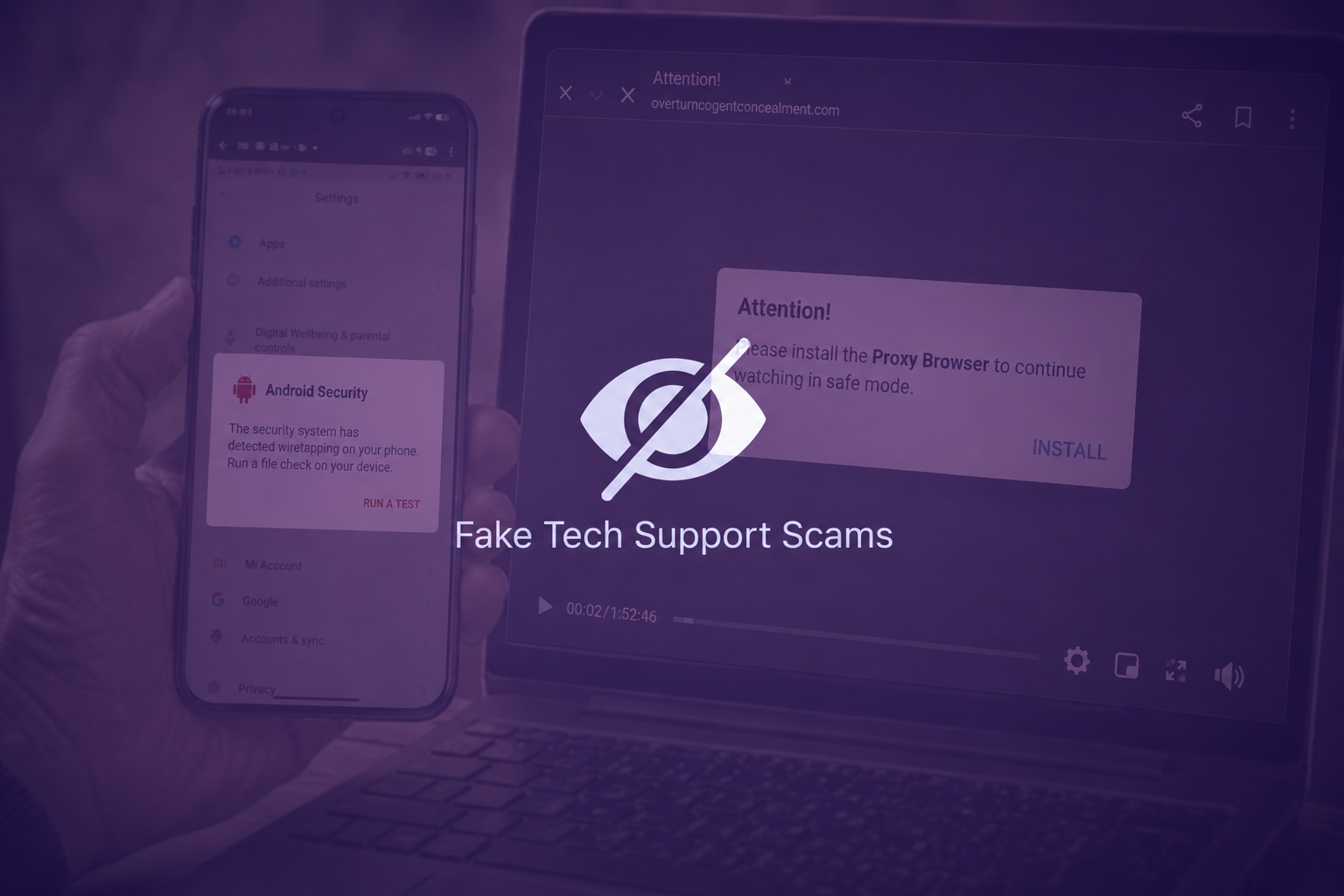
Tech Support Scams
Fake virus alerts, security warnings, and urgent pop-up messages convince seniors their device has been compromised, leading them to fraudulent support services that steal money, credentials, or install malicious software.
Scammers build trust through dating sites, social media, and messaging platforms before manipulating seniors into sending money, sharing personal information, or providing ongoing financial support.
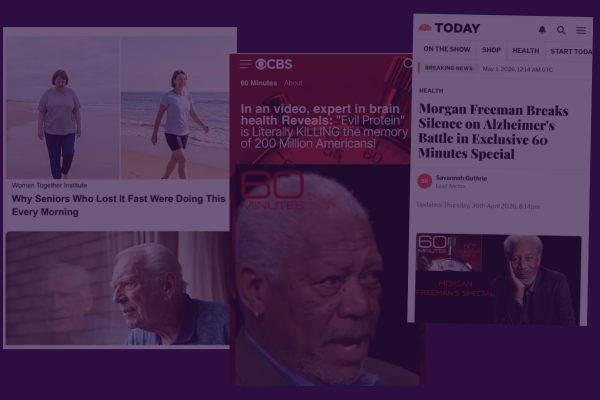
Fraudulent healthcare offers, fake Medicare communications, counterfeit pharmacies, and deceptive medical advertisements target seniors seeking care, medications, or insurance-related services.
Malicious advertising, compromised websites, and deceptive downloads can infect devices while seniors browse familiar websites, exposing sensitive information and creating opportunities for further exploitation.
Fake investment opportunities, cryptocurrency schemes, retirement scams, and financial impersonation campaigns are designed to steal savings by exploiting trust, urgency, and promises of guaranteed returns.
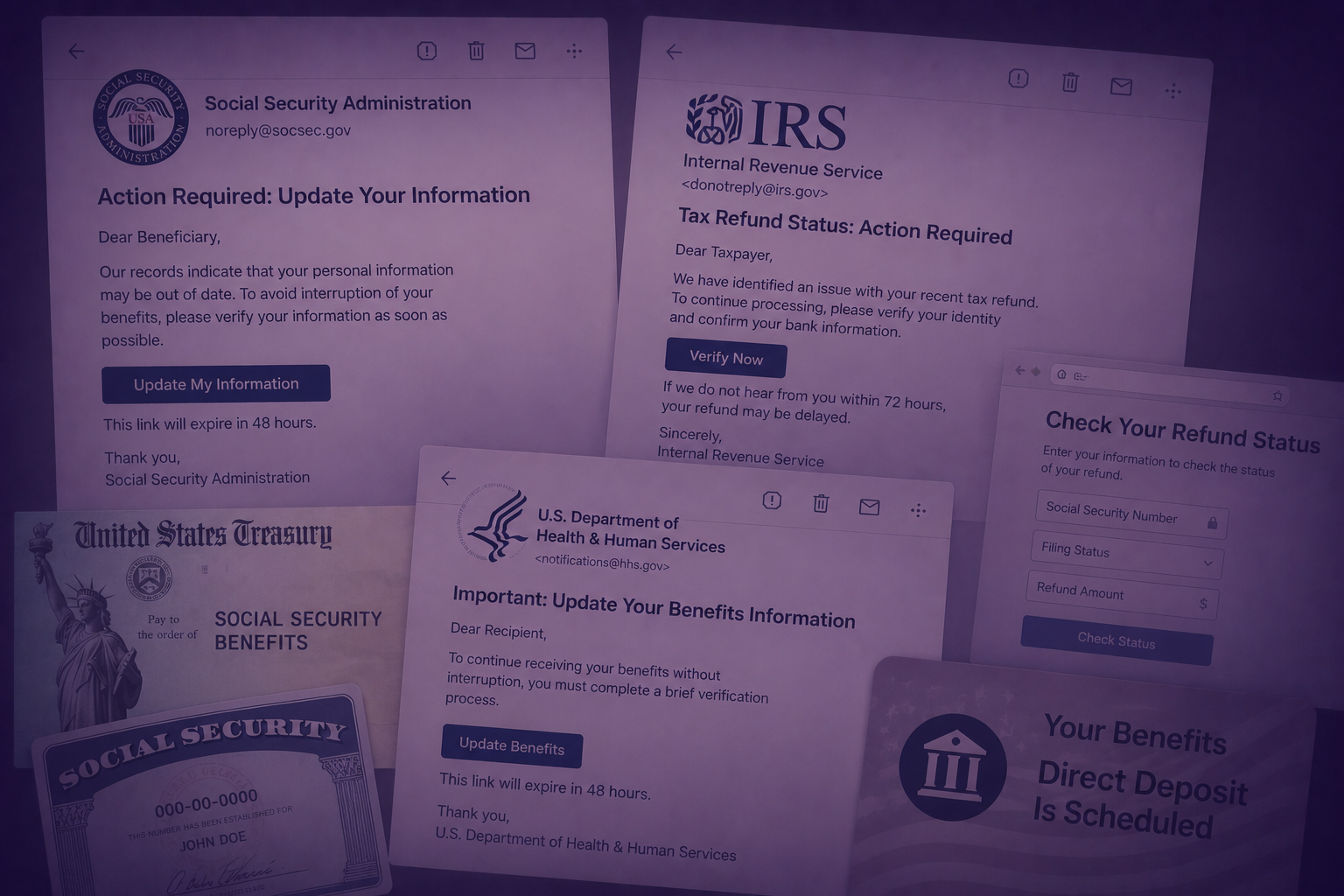
Cybercriminals impersonate government agencies or exploit stolen personal information to redirect benefits, file fraudulent claims, or deceive seniors into revealing sensitive financial and identity information.
Personal information stolen through online scams or malware is used to open financial accounts, commit tax fraud, obtain credit, or impersonate victims across multiple services.
Fraudulent online stores imitate trusted brands with fake discounts and convincing websites, collecting payment information while never delivering legitimate products or services.
Messages claiming seniors have won cash, vacations, or valuable prizes pressure victims to pay fees, share financial information, or provide personal data to claim nonexistent rewards.
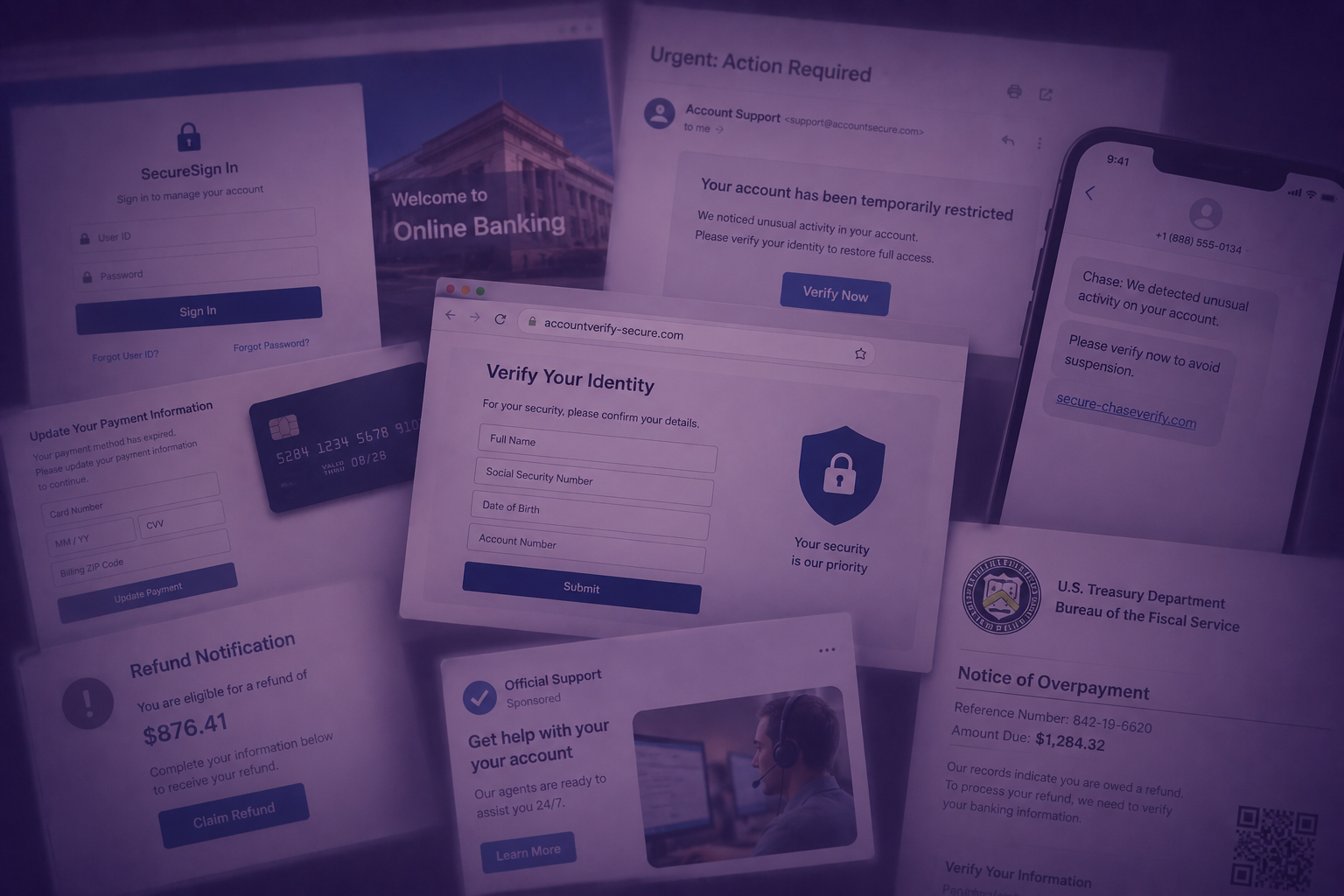
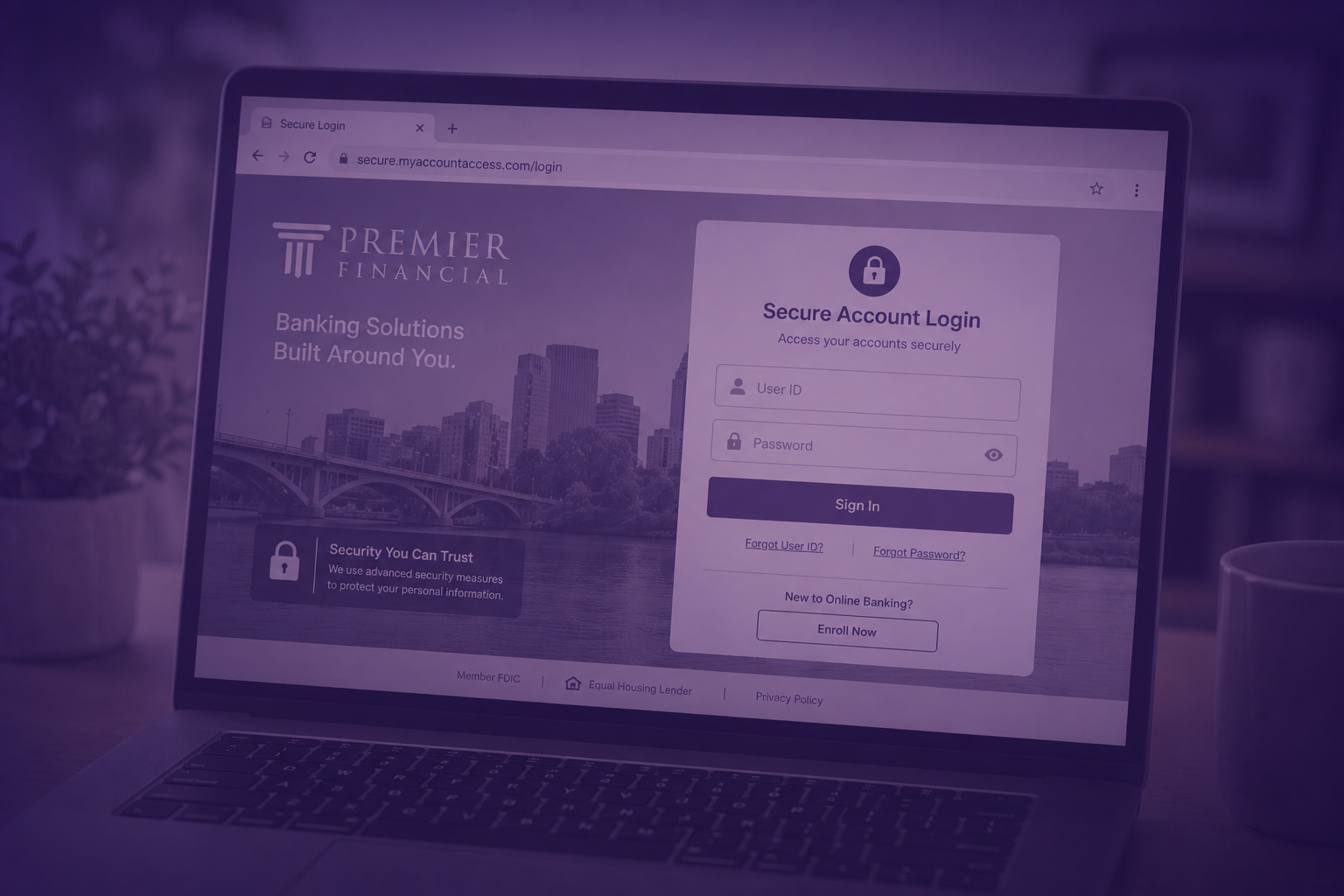
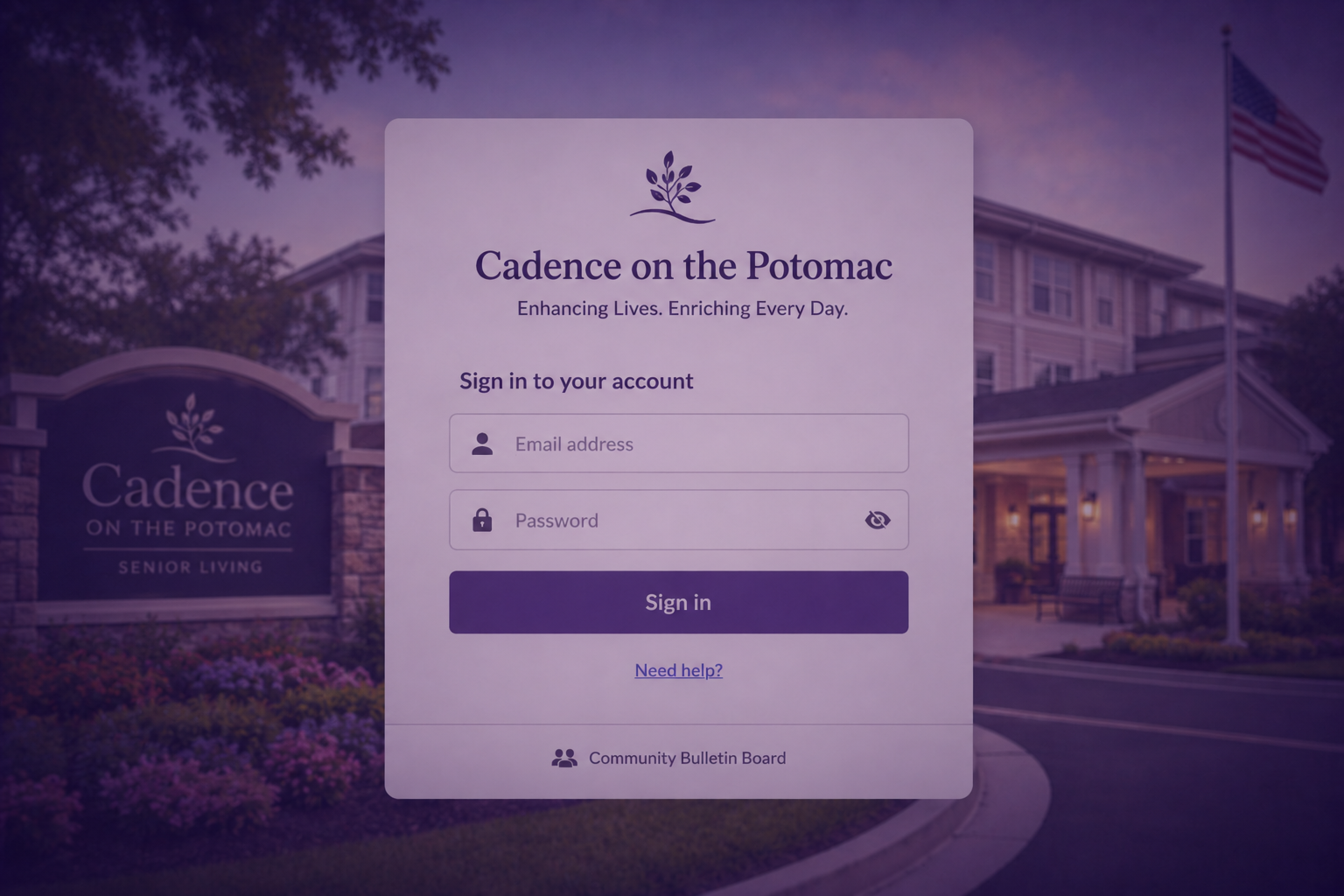
Attackers impersonate banks, healthcare providers, delivery services, or trusted organizations to trick seniors into revealing passwords, verification codes, or login credentials that provide unauthorized account access.